


Aufgrund der aktuellen Corona-Epidemie finden alle Lesekreise bis auf weiteres online statt - bitte kontaktiert uns via Facebook oder E-Mail (unter platypus.frankfurt@gmail.com), wenn ihr teilnehmen möchtet.
Der Marxismus nach dem Tod von Marx und Engels erfährt mit dem rasanten Wachstum der Arbeiterbewegung und der Entstehung der zweiten Internationale den Charakter einer politischen Massenbewegung, die sich in alle Teile der Welt verbreitet. Wir möchten im ersten Teil des Seminars genauer betrachten, worin der berühmt-berüchtigte Marxismus der Arbeiterbewegung bestanden und welche Krise ihn vor dem Beginn des Ersten Weltkrieges erfasst hat. Der Kampf gegen diese “Krise des Marxismus” hat mit der Oktoberrevolution und der deutschen Arbeiterrevolution von 1918-19 einen welthistorischen Maßstab erreicht, der die Hoffnungen und Katastrophen des zwanzigsten Jahrhunderts vorbereitete. Was war das Ziel der 1917 eingeleiteten internationalen Revolution und wie ist diese gescheitert? Welche politischen und ideologischen Konsequenzen folgten daraus?
Um diese Fragen näher zu beleuchten, werden wir uns in der zweiten Hälfte des Semesters mit den Reflexionen dieser Entwicklungen beschäftigen, wie sie von zentralen Figuren der Frankfurter Schule entwickelt wurden. Mit Lukács, Benjamin, Horkheimer und Adorno werden wir die Spannung, Kontinuität und Differenz zu den Vertretern der klassischen Periode des Marxismus entwickeln und uns somit ein bedeutendes Instrumentarium zum Verständnis der gegenwärtigen Welt anzueignen suchen. Das problematische Verhältnis von Theorie und Praxis im Marxismus und seiner Entwicklung hat die Welt des zwanzigsten Jahrhunderts entscheidend geprägt und hinterlässt ihre Narben bis in die Gegenwart. Mit der Erforschung dieses Verhältnisses möchten wir Aufschluss darüber erhalten, wie die Vergangenheit unsere eigene Imagination der Zukunft in Bann hält.
Die Texte werden im Voraus gelesen und dann zusammen diskutiert. Neueinsteiger/innen sind herzlich willkommen und Vorkenntnisse werden nicht benötigt!
● vorausgesetzte Texte
+ zusätzlich, empfohlene Texte
Zeit: immer donnerstags 18-21 Uhr
Ort: TBA
1. Woche: Revolutionäre Führung | 23.04
● Rosa Luxemburg, „Die ‘Junius-Broschüre’ / Krise der Sozialdemokratie“ Teil I. (1917)
● J.P. Nettl: „The German Social Democratic Party 1890-1914 as a Political Model“ (1965)
● Cliff Slaughter: „What is revolutionary leadership?“ (1960)
2. Woche: Reform oder Revolution | 30.04
● Rosa Luxemburg: „Sozialreform oder Revolution“ (1899)
+ Eugene Debs: „Competition versus Cooperation“ (1900)
3. Woche: Lenin und die Avantgardepartei | 07.05
● Spartakist-Broschüre: „Lenin und die Avantgardepartei“ (1978)
+ Richard Appignanesi und Oscar Zarate / A&Z: „Lenin für Anfänger“ (1977)
4. Woche: Was tun? | 14.05
● W.I. Lenin, „Was tun?“ (1902)
+ Richard Appignanesi und Oscar Zarate / A&Z: „Lenin für Anfänger“ (1977)
5. Woche: Mai, Massenstreik und Sozialdemokratie | TBA
● Rosa Luxemburg: „Massenstreik, Partei und Gewerkschaften“ (1906)
+ Rosa Luxemburg, „Blanquismus und Sozialdemokratie“ (1906)
6. Woche: Permanente Revolution | 28.05
● Leo Trotzki: „Ergebnisse und Perspektiven“ (1906)
+ Tariq Ali and Phil Evans: „Trotzki für Anfänger“ (1980)
7. Woche: Staat und Revolution | 04.06
● W.I. Lenin: „Staat und Revolution“ (1917)
8. Woche: Imperialismus | TBA
“Es ist die Sache der Bourgeoisie, die Trusts zu fördern, Kinder und Frauen in die Fabriken zu jagen, sie dort zu martern, zu korrumpieren, unsäglichem Elend preiszugeben. Wir „unterstützen“ diese Entwicklung nicht, wir „fordern“ so etwas nicht, wir kämpfen dagegen. Aber wie kämpfen wir? Wir erklären, die Trusts und die Fabrikarbeit der Frauen sind progressiv. Wir wollen nicht zurück, zum Handwerk, zum vormonopolistischen Kapitalismus, zur Hausarbeit der Frauen. Vorwärts über die Trusts usw. hinaus und durch sie zum Sozialismus.”
– Lenin: Das Militärprogramm der proletarischen Revolution (1916)
● W.I. Lenin: „Der Imperialismus als höchstes Stadium des Kapitalismus“ (1916)
+ W.I. Lenin: „Sozialismus und Krieg“, I. Kapitel: Die Grundsätze des Sozialismus und der Krieg 1914/1915 (1915)
9. Woche: Das Scheitern der Revolution | 18.06
● Rosa Luxemburg: „Was will der Spartakusbund?“ (1918)
● Rosa Luxemburg: „Unser Programm und die politische Situation“ (1918)
+ Rosa Luxemburg: "Die Sozialisierung der Gesellschaft" (1918)
+ Rosa Luxemburg: „Die russische Tragödie“ (1918)
+ Rosa Luxemburg: „Die Ordnung herrscht in Berlin“ (1919)
+ Eugene Debs: „The Day of the People“ (1919)
+ Sebastian Haffner: „Die deutsche Revolution 1918/19“ (1968) [engl. PDF]
10. Woche: Rückzug nach der Revolution | 25.06
● W.I. Lenin: „Der ‚Linke Radikalismus‘, die Kinderkrankheit im Kommunismus“ (1920)
+ W.I. Lenin: „Notizen eines Publizisten“ (1922/24)
11. Woche: Dialektik der Verdinglichung | 02.07
● Georg Lukács: „Der Standpunkt des Proletariats“ (= Teil III. des Kapitels “Die Verdinglichung und das Bewußtsein des Proletariats”), in: „Geschichte und Klassenbewusstsein“ (1923)
+ Being and becoming (freedom in transformation) / immanent dialectical critique chart of terms
+ Commodity form chart of terms
+ Capitalist contradiction chart of terms
+ Reification chart of terms
+ Georg Lukács: “Das Phänomen der Verdinglichung (= Teil I. des Kapitels “Die Verdinglichung und das Bewußtsein des Proletariats”), in: „Geschichte und Klassenbewusstsein“ (1923)
12. Woche: Lehren des Oktobers | 09.07
● Leo Trotzki: „1917 – Die Lehren des Oktobers“ (1924)
● Leo Trotzki: „Bolschewismus und Stalinismus“ (1937)
13. Woche: Trotzkismus | 16.07
+ Leo Trotzki: „Man muss von neuem kommunistische Parteien und eine Internationale aufbauen“ (1933)
+ Leo Trotzki: „If America should go communist“ (1934)
● Leo Trotzki: „Der Todeskampf des Kapitalismus und die Aufgaben der 4. Internationale“ – Das Übergangsprogramm (1938)
+ Leo Trotzki: „Gewerkschaften in der Epoche des imperialistischen Niedergangs“ (1940)
+ Leo Trotzki: „Brief an James P. Cannon“ (12. September 1939)
14. Woche: Der autoritäre Staat | 23.07
● Friedrich Pollock: „State Capitalism: Its Possibilities and Limitations“ (1941) (note 32 on USSR)
● Max Horkheimer: „Der autoritäre Staat“ (1942)
+ Capitalist contradiction chart of terms
15. Woche: Der Begriff der Geschichte | 30.07
● epigraphs by Louis Menand (on Edmund Wilson) and Peter Preuss (on Nietzsche) "on the modern concept of history"
+ Charles Baudelaire, from Fusées [Rockets] (1867)
+ Bertolt Brecht: „An die Nachgeborenen“ (1939)
+ W. Benjamin: „Zum Planetarium“, aus: Einbahnstraße (1928)
+ W. Benjamin: „Feuermelder“, aus: Einbahnstraße (1928)
+ W. Benjamin: „Erfahrung und Armut“ (1933)
+ W. Benjamin: „Theologisch-politisches Fragment“ (1921/39?)
+ Benjamin on history chart of terms
● Walter Benjamin: „Über den Begriff der Geschichte“ (1940)
● W. Benjamin: „Paralipomena zu den Thesen Über den Begriff der Geschichte" (In: GS I) (1940)
+ W. Benjamin: “Erkenntnistheoretisches, Theorie des Fortschritts” (v.a. S.588-89 [N8,1])
+ Being and becoming (freedom in transformation) / immanent dialectical critique chart of terms
16. Woche: Reflexionen über den Marxismus | 06.08
+ Capital in history timeline and chart of terms
+ Benjamin on history chart of terms
● Theodor W. Adorno: „Reflexionen zur Klassentheorie“ (1942)
● T.W. Adorno: „Ausschweifung“, im Anhang von „Minima Moralia“ (1944–47)
+ Being and becoming (freedom in transformation) / immanent dialectical critique chart of terms
+ T.W. Adorno: „Zueignung“, „Vermächtnis“, „Vor Mißbrauch wird gewarnt“ und „Zum Ende“, in: „Minima Moralia“ (1944-47)
+ M. Horkheimer und T.W. Adorno: „Diskussion über Theorie und Praxis“ (1956)
17. Woche: Theorie und Praxis | 13.08
+ T.W. Adorno: „Zu Subjekt und Objekt“ (1969)
+ Commodity form chart of terms
+ Reification chart of terms
+ Capitalist contradiction chart of terms
+ Adorno's critique of actionism chart of terms
● Theodor W. Adorno: „Marginalien zu Theorie und Praxis“ (1969)
● T.W. Adorno: „Resignation“ (1969)
+ Being and becoming (freedom in transformation) / immanent dialectical critique chart of terms
+ T.W. Adorno: „Spätkapitalismus oder Industriegesellschaft?“ (1968) [AUDIO]
+ Organic composition of capital chart of terms
+ Esther Leslie: „Introduction to the 1969 Adorno-Marcuse correspondence“ (1999)
+ Theodor W. Adorno und Herbert Marcuse: „Briefwechsel über die Neue Linke“ [Dokumente Nr. 300, 313, 322, 336, 338, 340 & 349] (1969)+ Der Spiegel, Interview mit T.W. Adorno: „Keine Angst vor dem Elfenbeinturm“ (1969)
Aufgrund der aktuellen Corona-Epidemie finden die Filmscreenings bis auf weiteres via watch2gether und Discord statt - bitte kontaktiert uns via Facebook oder E-Mail (unter platypus.frankfurt@gmail.com), wenn ihr teilnehmen möchtet
Die vorgeführten Filme sollen einen Rahmen schaffen für den zweiten Teil des Lesekreises der Platypus Affiliated Society, „Was ist revolutionärer Marxismus?“.
Sie beschäftigen sich mit der historischen Periode des ausgehenden 19. und beginnenden 20. Jahrhunderts, eine Zeit des Umbruchs sowohl welthistorisch wie auch in der Geschichte des Marxismus und der Linken.
Es werden die folgenden Filme gemeinsam geschaut und anschließend in einer gelassenen Atmosphäre diskutiert.
Zeit: Immer donnerstags 18-21 Uhr
Ort: Bitte kontaktiert uns via Facebook oder E-Mail (unter platypus.frankfurt@gmail.com), wenn ihr teilnehmen möchtet.
26.03.2020 - Fall of Eagles Episode #5 "The Last Tsar" und #6 "Absolute Beginners" über die Ursprünge der Bolschewiki.
02.04.2020 - 37 Days Episode #3 "One Long Weekend" über den Beginn des 1.WK; und Fall of Eagles Episode #12 "The Secret War" über den ersten Weltkrieg und die Russische Revolution.
09.04.2020 - Fall of Eagles Episode #13 "End Game" über die deutsche Revolution 1918-19; und Oliver Stone's Untold History of the United
States Prequel Episode A. 1900-20, über Imperialismus, den ersten Weltkrieg und die Russische Revolution.
16.04.2020 - Rosa Luxemburg Film.
Durch die Lektüre von bedeutenden Texten der Hochphase des Marxismus in der Zweiten Internationale und ihrer Krise im 20. Jahrhundert betrachten wir das Problem des Bewusstseins dieser Geschichte und ihrer politischen Implikationen für die Gegenwart. Die Textauswahl beinhaltet Schriften von Luxemburg, Lenin und Trotzki, die philosophische Reflexion des Marxismus von Lukács und Korsch und ihre Auswirkungen auf die Kritische Theorie von Benjamin, Horkheimer und Adorno.
Wöchentlich
Mittwochs, 18:30–21:30
ab 04. März 2020
Cafe C.I. - Club International
Payergasse 14, 1160 Wien
Die Texte werden zu Hause gelesen und beim Lesekreis besprochen. Kein Vorwissen ist nötig. Neueinsteigende sind ausdrücklich erwünscht.
Mailingliste: https://groups.google.com/d/forum/platypus-wien/join
Facebook-Gruppe: Platypus Österreich/Austria
Facebook-Seite: Platypus Wien
Leseliste
- vorausgesetzte / + empfohlene Texte
04.03.2020 | Woche 10. Revolutionäre Führung
- Rosa Luxemburg, „Die ‘Junius-Broschüre’ / Krise der Sozialdemokratie“ Teil I. (1916)
- J.P. Nettl, “The German Social Democratic Party 1890-1914 as a Political Model” (1965)
- Cliff Slaughter, “What is revolutionary leadership?” (1960)
11.03.2020 | Woche 11. Reform oder Revolution
- Rosa Luxemburg, „Sozialreform oder Revolution“ (1899)
+ Eugene V. Debs, “Competition vs. Cooperation” (1900)
18.03.2020 | Woche 12. Lenin und die Avantgardepartei
- Spartakist-Broschüre, „Lenin und die Avantgardepartei“ (1978)
+ Richard Appignanesi and Oscar Zarate / A&Z, Introducing Lenin and the Russian Revolution/ Lenin for Beginners (1977)
25.03.2020 | Woche 13. Was tun?
- W.I. Lenin, „Was tun?“ (1902)
+ Richard Appignanesi and Oscar Zarate / A&Z, Introducing Lenin and the Russian Revolution/ Lenin for Beginners (1977)
01.04.2020 | Woche 14. Massenstreik und Sozialdemokratie
- Rosa Luxemburg, „Massenstreik, Partei und Gewerkschaften“ (1906)
- Rosa Luxemburg, „Blanquismus und Sozialdemokratie“ (1906)
22.04.2020 | Woche 15. Permanente Revolution
- Leo Trotzki, „Ergebnisse und Perspektiven“ (1906)
+ Tariq Ali and Phil Evans, Introducing Trotsky and Marxism / Trotsky for Beginners (1980)
29.04.2020 | Woche 16. Staat und Revolution
- W.I. Lenin, „Staat und Revolution“ (1917)
06.05.2020 | Woche 17. Imperialismus
- W.I. Lenin, „Der Imperialismus als höchstes Stadium des Kapitalismus“ (1916)
+ W.I. Lenin, „Sozialismus und Krieg“ (1915)
13.05.2020 | Woche 18. Scheitern der Revolution
- Rosa Luxemburg, „Was will der Spartakusbund?“ (1918)
- Rosa Luxemburg, „Unser Programm und die politische Situation“ (1918)
+ Rosa Luxemburg, „Die Sozialisierung der Gesellschaft“ (1918)
+ Rosa Luxemburg, „Die russische Tragödie“ (1918)
+ Rosa Luxemburg, „Die Ordnung herrscht in Berlin“ (1919)
+ Sebastian Haffner, „Die deutsche Revolution 1918/19“ (1968)
+ Eugene V. Debs, “The Day of the People” (1900)
20.05.2020 | Woche 19. Rückzug nach der Revolution
- W.I. Lenin, „Der „Linke Radikalismus“, die Kinderkrankheit im Kommunismus“ (1920)
+ W.I. Lenin, „Notizen eines Publizisten“ (1922/24)
27.05.2020 | Woche 20. Dialektik der Verdinglichung
- György Lukács, „Der Standpunkt des Proletariats“ (= Teil III. des Kapitels „Die Verdinglichung und das Bewußtsein des Proletariats“) In: Geschichte und Klassenbewusstsein (1923)
+ Being and becoming (freedom in transformation) / immanent dialectical critique chart of terms
+ Commodity form chart of terms
+ Capitalist contradiction chart of terms
03.06.2020 | Woche 21. Die Lehren des Oktobers
- Leo Trotzki, „1917 – Die Lehren des Oktobers“ (1924)
- Leo Trotzki, „Bolschewismus und Stalinismus“ (1937)
10.06.2020 | Woche 22. Trotzkismus
- Leo Trotzki, „Der Todeskampf des Kapitalismus und die Aufgaben der 4. Internationale“ (Das Übergangsprogramm) (1938)
+ Leo Trotzki, „Die Gewerkschaften in der Epoche des imperialistischen Niedergangs“ (1940)
+ Leo Trotzki, „Brief an James P. Cannon“ (1939)
+ Leo Trotzki, “To Build Communist Parties and an Interational Anew” (1933)
+ Leo Trotzki, „Wenn Amerika kommunistisch würde“ (1934)
17.06.2020 | Woche 23. Der autoritäre Staat
- Friedrich Pollock, „Staatskapitalismus“ (1941)
- Max Horkheimer, „Autoritärer Staat“ (1940/1942)
+ Capitalist contradiction chart of terms
24.06.2020 | Woche 24. Über den Begriff der Geschichte
- Epigraphs by Louis Menand (on Edmund Wilson) and Peter Preuss (on Nietzsche) “on the modern concept of history”
- Walter Benjamin, „Über den Begriff der Geschichte“ (1940)
- Walter Benjamin, „Paralipomena zu den Thesen Über den Begriff der Geschichte“ (1940)
+ Charles Baudelaire, „Fusées“ (1867)
+ Bertolt Brecht, „An die Nachgeborenen“ (1939)
+ Walter Benjamin, „Erfahrung und Armut“ (1933)
+ Walter Benjamin, „Theologisch-politisches Fragment“ (1921/39?)
+ Walter Benjamin, „Zum Planetarium“ (aus: Einbahnstraße, 1928)
+ Walter Benjamin, „Feuermelder“ (aus: Einbahnstraße, 1928)
+ Benjamin on history chart of terms
+ Being and becoming (freedom in transformation) chart of terms
01.07.2020 | Woche 25. Reflexionen über den Marxismus
- Theodor Adorno, „Reflexionen zur Klassentheorie“ (1942)
- Theodor Adorno, „Ausschweifung“ (Anhang Minima Moralia) (1944–47)
+ Theodor Adorno, „Zueignung“, „Vor Mißbrauch wird gewarnt“ und „Vermächtnis“, aus Minima Moralia (1944-47)
+ Max Horkheimer und Theodor Adorno, Diskussion über Theorie und Praxis (1956)
+ Being and becoming (freedom in transformation) / immanent dialectical critique chart of terms
08.07.2020 | Woche 26. Theorie und Praxis
- Theodor Adorno, „Marginalien zu Theorie und Praxis“ (1969)
- Theodor Adorno, „Resignation“ (1969)
+ Theodor Adorno, „Zu Subjekt und Objekt“ (1969)
+ Commodity form chart of terms
+ Reification chart of terms
+ Capitalist contradiction chart of terms
+ Adorno’s critique of actionism chart of terms
+ Theodor Adorno, „Spätkapitalismus oder Industriegesellschaft?“ (1968) [Audio] [Text]
+ Theodor Adorno und Herbert Marcuse, “Correspondence on the German New Left” (1969)
+ Esther Leslie, “Introduction to the 1969 Adorno-Marcuse correspondence” (1999)
+ Der Spiegel, Interview mit T. W. Adorno: „Keine Angst vor dem Elfenbeinturm“ (1969)
+ Being and becoming (freedom in transformation) / immanent dialectical critique chart of terms
Einheiten zur Neuen Linken (Fortsetzung der Buchstaben-Wochen des Wintersemesters 2019/20)
15.07.2020 | Woche H. 1960s New Left I: Neo-Marxismus
- Martin Nicolaus, “The unknown Marx” (1968)
- Theodor Adorno, „Spätkapitalismus oder Industriegesellschaft?“ (1968) [Audio] [Text]
- Moishe Postone, “Necessity, labor, and time” (1978)
+ Commodity form chart of terms
+ Capitalist contradiction chart of terms
+ Organic composition of capital chart of terms
+ Moishe Postone, “Interview: Marx after Marxism” (2008)
+ Moishe Postone, “History and Helplessness: Mass Mobilization and Contemporary Forms of Anticapitalism” (2006)
+ Moishe Postone, “Theorizing the Contemporary World: Robert Brenner, Giovanni Arrighi, David Harvey” (2006)
22.07.2020 | Woche I. 1960s New Left II: Gender und Sexualität
„Die Lage der Frau unterscheidet sich von der jeder anderen gesellschaftlichen Gruppe, weil sie nicht eine von mehreren abgrenzbaren sozialen Gruppen Größen sind, sondern die Hälfte eines Ganzen: der Menschengattung. Frauen sind unabdingbar und unersetzlich; deshalb lassen sie sich auch nicht in derselben Weise ausbeuten wie andere Gruppen. Für die condition humaine sind sie zwar grundlegend, in ihren wirtschaftlichen, sozialen und politischen Rollen hingegen marginal. Gerade dieser Zusammenhang: gleichzeitig grundlegend und marginal zu sein, hat sich für sie als verhängnisvoll erwiesen.“
Juliet Mitchell, „Frauen – die längste Revolution“ (1966)
- Juliet Mitchell, „Frauen – die längste Revolution“ (1966)
- Clara Zetkin, „Erinnerungen an Lenin“ (1925)
- Theodor Adorno, „Sexualtabus und Recht heute“ (1963)
- John D’Emilio, “Capitalism and Gay Identity” (1983)
+ Capitalist contradiction chart of terms
29.07.2020 | Woche J. 1960s New Left III: Anti-black racism in the U.S.
“As a social party we receive the Negro and all other races upon absolutely equal terms. We are the party of the working class, the whole working class, and we will not suffer ourselves to be divided by any specious appeal to race prejudice; and if we should be coaxed or driven from the straight road we will be lost in the wilderness and ought to perish there, for we shall no longer be a Socialist party.”
Eugene Debs, “The Negro in the class struggle” (1903)
- Richard Fraser, “Two lectures on the black question in America and revolutionary integrationism” (1953)
- James Robertson und Shirley Stoute, “For black Trotskyism” (1963)
- Adolph Reed, “Black particularity reconsidered” (1979)
+ Eugene Debs, “The Negro in the class struggle” (1903)
+ Eugene Debs, “The Negro and his nemesis” (1904)
+ Spartacist League, “Black and red: Class struggle road to Negro freedom” (1966)
+ Bayard Rustin, “The failure of black separatism” (1970)
+ Adolph Reed, “Paths to Critical Theory” (1984)
+ Capitalist contradiction chart of terms
05.08.2020 | Woche K. Vorläufer der Frankfurter Schule
- Wilhelm Reich, „Die Ideologie als materielle Gewalt“ (1933/46)
- Siegried Kracauer, „Das Ornament der Masse“ (1927)
+ Siegfried Kracauer, “Photography” (1927)
+ Capitalist contradiction chart of terms
Wednesday Jan. 15, 2:30PM at Kresge Study Center Room 348
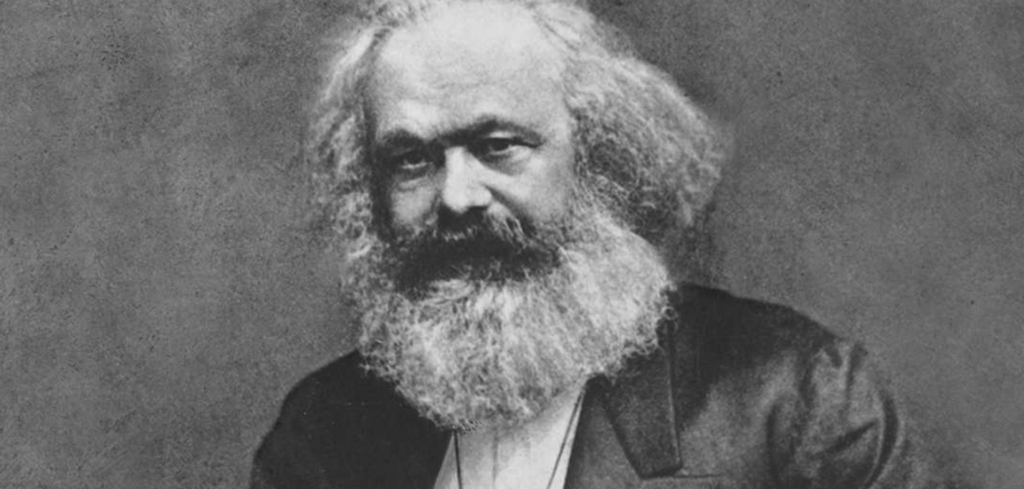
This teach-in will be led by Matthew Ramirez.
In the mid-19th century, Marx and Engels observed, in the Communist Manifesto, that a "specter" was haunting Europe â the specter of Communism. A century and a half later, it is Marxism itself that continues to haunt the Left, while capitalism remains.
What does it mean that Marx and Marxism still appeal, while political movements for socialism are weak or non- existent? What were Marxism's original points of departure for considering radical possibilities for freedom that might still speak to the present?
How does Marxism still matter?
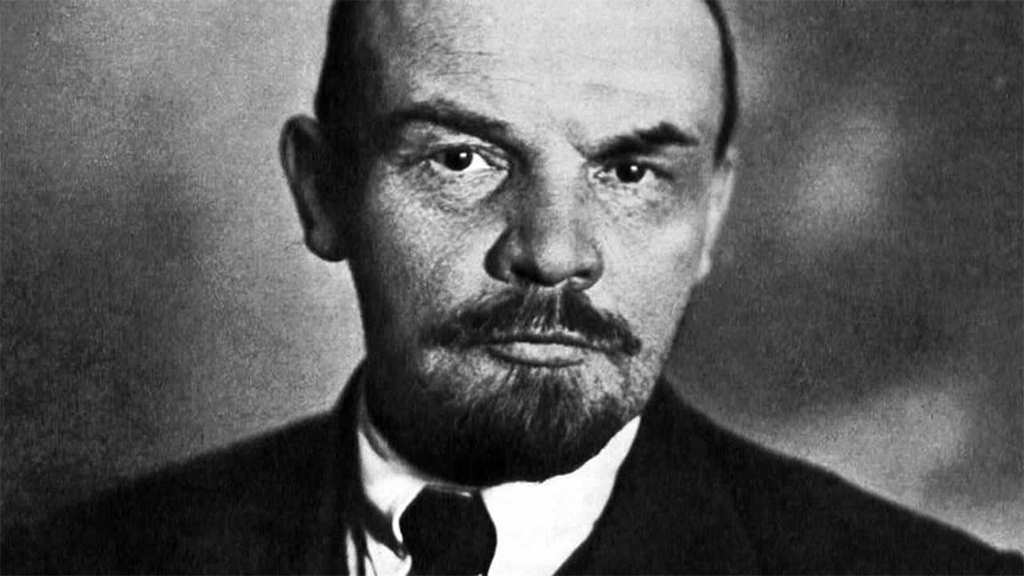
II. Introduction to revolutionary Marxism
Tuesdays 6-8 via Zoom. For meeting ID/URL, please RSVP at london@platypus1917.org
(Previously Wednesdays, 6-8pm, University of Manchester A213 Samuel Alexander Building M13 9PP)
• required / + recommended reading
Marx and Engels readings pp. from Robert C. Tucker, ed., Marx-Engels Reader (Norton 2nd ed., 1978)
Recommended winter break preliminary readings:
+ Leszek Kolakowski, “The concept of the Left” (1968)
+ Richard Appignanesi and Oscar Zarate / A&Z, Introducing Lenin and the Russian Revolution / Lenin for Beginners (1977)
+ Sebastian Haffner, Failure of a Revolution: Germany 1918–19 (1968)
+ Tariq Ali and Phil Evans, Introducing Trotsky and Marxism / Trotsky for Beginners (1980)
+ James Joll, The Second International 1889–1914 (1966)
+ Edmund Wilson, To the Finland Station: A Study in the Writing and Acting of History (1940), Part II. Ch. (1–4,) 5–10, 12–16; Part III. Ch. 1–6
Film screening | Jan. 15, 2020
Fall of Eagles episodes: #5 "The Last Tsar" and #6 "Absolute Beginners" on the origins of the Bolsheviks
Film screening | Jan. 22, 2020
Reds (1981) film on American anarchists, Socialists and Communists in WWI and the Russian Revolution
Winter–Spring 2020
II. Introduction to revolutionary Marxism
Week 11. Revolutionary leadership | Jan. 29, 2020
• Rosa Luxemburg, “The Crisis of German Social Democracy” Part 1 (1915)
• J. P. Nettl, “The German Social Democratic Party 1890–1914 as a Political Model” (1965)
• Cliff Slaughter, “What is Revolutionary Leadership?” (1960)
Week 12. Reform or revolution? | Feb. 5, 2020
• Luxemburg, Reform or Revolution? (1900/08)
+ Eugene Debs, "Competition versus Cooperation" (1900)
Week 13. Lenin and the vanguard party | Feb. 12, 2020
• Spartacist League, Lenin and the Vanguard Party (1978)
+ Richard Appignanesi and Oscar Zarate / A&Z, Introducing Lenin and the Russian Revolution / Lenin for Beginners (1977)
Week 14. What is to be done? | Feb. 19, 2020
• V. I. Lenin, What is to be Done? (1902)
+ Richard Appignanesi and Oscar Zarate / A&Z, Introducing Lenin and the Russian Revolution / Lenin for Beginners (1977)
Week 15. Mass strike and social democracy | Feb. 26, 2020
• Luxemburg, The Mass Strike, the Political Party and the Trade Unions (1906)
+ Luxemburg, "Blanquism and Social Democracy" (1906)
Week 16. Permanent revolution | Mar. 4, 2020
• Leon Trotsky, Results and Prospects (1906)
+ Tariq Ali and Phil Evans, Introducing Trotsky and Marxism / Trotsky for Beginners (1980)
Week 17. State and revolution | Mar. 11, 2020
• Lenin, The State and Revolution (1917)
Week 18. Imperialism | Mar. 18, 2020
• Lenin, Imperialism, the Highest Stage of Capitalism (1916)
+ Lenin, Socialism and War Ch. 1 The principles of socialism and the War of 1914–15 (1915)
Week 19. Failure of the revolution | Mar. 25, 2020
• Luxemburg, “What does the Spartacus League Want?” (1918)
• Luxemburg, “On the Spartacus Programme” (1918)
+ Luxemburg, "German Bolshevism" (AKA "The Socialisation of Society") (1918)
+ Luxemburg, “The Russian Tragedy” (1918)
+ Luxemburg, “Order Reigns in Berlin” (1919)
+ Eugene Debs, “The Day of the People” (1919)
+ Sebastian Haffner, Failure of a Revolution: Germany 1918–19 (1968)
Week 20-21. Apr. 1/8 2020 - Easter break / Platypus International Convention, Chicago, April 3-5.
Week 22. Retreat after revolution | Apr. 15, 2020
• Lenin, “Left-Wing” Communism: An Infantile Disorder (1920)
+ Lenin, "Notes of a Publicist" (1922)
Week 23. Dialectic of reification | Apr. 21, 2020
• Lukács, “The Standpoint of the Proletariat” (Part III of “Reification and the Consciousness of the Proletariat,” 1923). Available in three sections from marxists.org: section 1 section 2 section 3
+ Being and becoming (freedom in transformation) / immanent dialectical critique chart of terms
+ Commodity form chart of terms
+ Capitalist contradiction chart of terms + Organic composition of capital chart of terms
+ Reification chart of terms
+ Lukács, “The phenomenon of reification” (Part I of “Reification and the consciousness of the proletariat,” History and Class Consciousness, 1923)
Week 24. Lessons of October | Apr. 28, 2020
• Trotsky, The Lessons of October (1924) [PDF]
• Trotsky, "Stalinism and Bolshevism" (1937)
Week 25. Trotskyism | May 5, 2020
+ Trotsky, "To build communist parties and an international anew" (1933)
+ Trotsky, "If America should go communist" (1934)
• Trotsky, The Death Agony of Capitalism and the Tasks of the Fourth International (1938)
+ Trotsky, "Trade unions in the epoch of imperialist decay" (1940)
+ Trotsky, Letter to James Cannon (September 12, 1939)
Week 26. The authoritarian state | May 12, 2020
• Friedrich Pollock, "State Capitalism: Its Possibilities and Limitations" (1941) (note 32 on USSR)
• Max Horkheimer, "The Authoritarian State" (1942)
+ Capitalist contradiction chart of terms
Week 27. On the concept of history | May 19, 2020
• epigraphs by Louis Menand (on Edmund Wilson) and Peter Preuss (on Nietzsche) on the modern concept of history
+ Charles Baudelaire, from Fusées [Rockets] (1867)
+ Bertolt Brecht, "To posterity" (1939)
+ Walter Benjamin, "To the planetarium" (from One-Way Street, 1928)
+ Benjamin, "Fire alarm" (from One-Way Street, 1928)
[JPG] [PDF]
+ Benjamin, "Experience and poverty" (1933)
+ Benjamin, Theologico-political fragment (1921/39?)
+ Benjamin on history chart of terms
• Benjamin, "On the Concept of History" (AKA "Theses on the Philosophy of History") (1940) [PDF]
• Benjamin, Paralipomena to "On the Concept of History" (1940)
+ Benjamin, Arcades Project Convolute N, "On the theory of knowledge, theory of progress" (see especially p. 471 [N8,1] on Horkheimer on unredeemablility of past suffering)
+ Being and becoming (freedom in transformation) / immanent dialectical critique chart of terms
Week 28. Reflections on Marxism | May 26, 2020
+ Capital in history timeline and chart of terms
+ Benjamin on history chart of terms
• Theodor Adorno, “Reflections on Class Theory” (1942)
• Adorno, “Imaginative Excesses” (1944–47)
+ Being and becoming (freedom in transformation) / immanent dialectical critique chart of terms
+ Adorno, Dedication, "Bequest", "Warning: Not to be Misused" and "Finale", Minima Moralia (1944–47)
+ Horkheimer and Adorno, "Discussion about Theory and Praxis" (AKA "Towards a New Manifesto?") [Deutsch] (1956)
Week 29. Theory and practice | June 2, 2020
+ Adorno, “On Subject and Object” (1969)
+ Commodity form chart of terms
+ Reification chart of terms
+ Capitalist contradiction chart of terms
+ Adorno's critique of actionism chart of terms
• Adorno, “Marginalia to Theory and Praxis” (1969)
• Adorno, “Resignation” (1969)
+ Being and becoming (freedom in transformation) / immanent dialectical critique chart of terms
+ Adorno, “Late Capitalism or Industrial Society?” (AKA “Is Marx Obsolete?”) (1968)
+ Organic composition of capital chart of terms
+ Esther Leslie, Introduction to the 1969 Adorno-Marcuse correspondence (1999)
+ Adorno and Herbert Marcuse, correspondence on the German New Left (1969)
+ Adorno, Interview with Der Spiegel magazine (1969)