


From the Zero Books website (Jan, 18, 2018):
" Chris Cutrone is the founder and President of the Platypus Affiliated Society. He is also the author of the rather infamous essay “Why Not Trump?” and other essays such as The Millennial Left is dead and Democratic revolution and the contradiction of capital. In this episode of the Zero Books podcast we discuss the Trump administration’s first year and the left’s various panicked reactions to what Cutrone says is a moment of transition for capitalism itself and US politics in particular."
Radical Minds is a show that airs every Thursday at 2 PM on WHPK 88.5 FM Chicago. Aired January 18th, 2018, this episode features a reading of "The end of the Gilded Age: Discontents of the Second Industrial Revolution Today" by its author, Chris Cutrone, followed by a discussion with the hosts, Erin Hagood and Stephanie Gomez.
The article can be found here: https://platypus1917.org/2017/12/02/end-gilded-age-discontents-second-industrial-revolution-today/
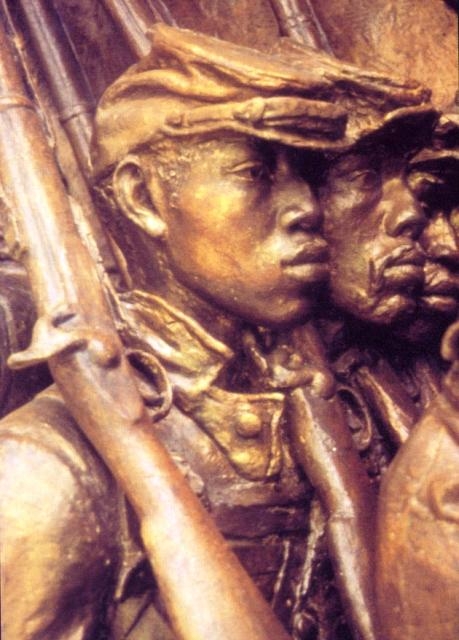
A series of four films on the black experience in revolutionary history
• 1773 / 1784–89: Jefferson in Paris (1995)
• 1863: Glory (1989)
• 1930-68: Every Cook Can Govern: The Life of CLR James (2016)
• 1970: Finally Got the News (1970)
Sundays, 8:00 PM
Lindsay Young Auditorium
John C. Hodges Library
University of Tennessee
1015 Volunteer Blvd.

Jefferson in Paris (1995)
February 4, 2017
1873: Reconstruction-era Ohio: A reporter interviews Madison Hemings, a descendant of Thomas Jefferson and Sally Hemings, telling their story. 1784–89: Leading up to the French Revolution, Jefferson is the U.S. ambassador to France, whose intellectuals, such as American Revolutionary War veteran Lafayette, join the revolt of the Third Estate, hoping to follow the American example. Jefferson helps them compose the Declaration of the Rights of Man and Citizen, discussing his frustration at the American failure to abolish slavery. Jefferson begins a relationship and fathers a child with his slave Sally Hemings, sister of his deceased wife, promising to free her and her children.
"He has waged cruel war against human nature itself, violating its most sacred rights of life and liberty in the persons of a distant people who never offended him, captivating & carrying them into slavery in another hemisphere or to incur miserable death in their transportation thither. This piratical warfare, the opprobrium of infidel powers, is the warfare of the Christian King of Great Britain. Determined to keep open a market where Men should be bought and sold, he has prostituted his negative for suppressing every legislative attempt to prohibit or restrain this execrable commerce."
- Thomas Jefferson, original draft of the Declaration of Independence (1776)"I do not permit myself to take part in any new enterprises, even for bettering the condition of man, not even in the great one which is the subject of your letter [the abolition of slavery], and which has been thro' life that of my greatest anxieties. the march of events has not been such as to render it’s completion practicable within the limits of time alloted to me; and I leave it's accomplishment as the work of another generation. and I am cheared when I see that on which it is devolved, taking it up with so much good will, and such mind engaged in it’s encoragement. the abolition of the evil is not impossible: it ought never therefore to be despaired of. every plan should be adopted, every experiment tried, which may do something towards the ultimate object. that which you propose is well worthy of tryal. it has succeeded with certain portions of our white brethren, under the care of a [Christian communist George] Rapp and an [Utopian Socialist Robert] Owen; and why may it not succeed with the man of colour?"
- Jefferson, letter to Frances Wright (1822)

Glory (1989)
February 11, 2017
1863: After the Union victory at Antietam, Lincoln orders the Emancipation Proclamation. Robert Gould Shaw, the son of an influential Abolitionist, is promoted to Colonel and given command of the 54th Massachusetts Volunteer Infantry, the first all-black regiment of Union soldiers, organized by Frederick Douglass.
Directed by Edward Zwick. Starring Matthew Broderick, Denzel Washington, Morgan Freeman, and Cary Elwes. Music by James Horner.
Glory is based on the letters of Robert Gould Shaw, son of New England Abolitionists, chosen to lead the first black regiment in the Union Army during the U.S. Civil War. After the 1960s, revisionist historiography questioned the nature of the Civil War in the fight to overcome slavery. Post-Reconstruction anti-black racism seemed to belie the struggle for social equality and freedom exemplified by Abolitionism, but, as Robert Lowell wrote in his poem "For the Union Dead" during the Civil Rights era, this history continued to demand redemption.
"While the workingmen, the true political powers of the North, allowed slavery to defile their own republic, while before the Negro, mastered and sold without his concurrence, they boasted it the highest prerogative of the white-skinned laborer to sell himself and choose his own master, they were unable to attain the true freedom of labor, or to support their European brethren in their struggle for emancipation; but this barrier to progress has been swept off by the red sea of civil war.
The workingmen of Europe feel sure that, as the American War of Independence initiated a new era of ascendancy for the middle class, so the American Antislavery War will do for the working classes. They consider it an earnest of the epoch to come that it fell to the lot of Abraham Lincoln, the single-minded son of the working class, to lead his country through the matchless struggle for the rescue of an enchained race and the reconstruction of a social world."
— Karl Marx, letter to President Abraham Lincoln (1864)
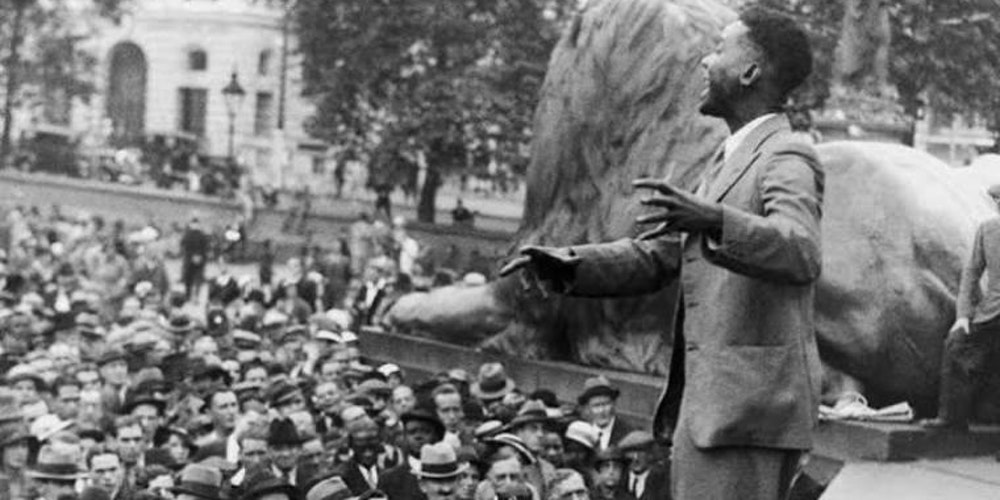
Every Cook Can Govern: The life and impact of CLR James (2016)
February 18, 2017
The ideas and works of Trinidad-born revolutionary and writer C.L.R. James come to life as exclusive never-before-seen footage of the man himself is interwoven with testimony from those who knew him along with leading scholars providing astute contextual and political analysis of his life and works. The result is a historical tour-de-force which grapples with James’ thoughts on culture, cricket and society and above all his politics, in particular his outspoken opposition to: colonialism, abolitionist myths, the Second World War and Marxism and his belief in the capacity of us all to change the world.
Having been trained from scratch by WORLDwrite and its Citizen TV station WORLDbytes to shoot, research and present, over 200 volunteers have been the backbone of this world-first production which, crowd-featured and crowd-filmed, does credit to James’ conviction that every cook can govern.
"This independent Negro movement is able to intervene with terrific force upon the general social and political life of the nation, despite the fact that it is waged under the banner of democratic rights ... [and] is able to exercise a powerful influence upon the revolutionary proletariat, that it has got a great contribution to make to the development of the proletariat in the United States, and that it is in itself a constituent part of the struggle for socialism."
— C.L.R. James, "The Revolutionary Answer to the Negro Problem in the United States" (1948)
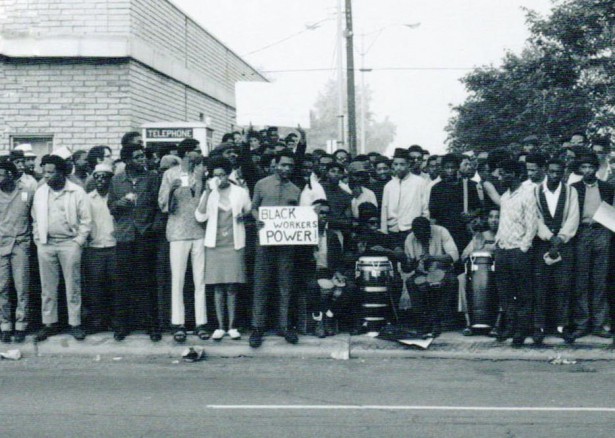
Finally Got the News (2016)
February 25, 2017
This documentary offers black workers views of working conditions inside Detroit’s auto factories, focusing on the League of Revolutionary Black Workers and their efforts to build an independent black labor organization. Beginning with a historical montage, from the early days of slavery through the subsequent growth and organization of the working class, the film examines the crucial role of the black worker in the American economy.
"When one approaches the League one must look at the whole phenomenon it represented and one must also put oneself in the period in which it appeared. One can look at some of the nationalist ideas promoted by the League or look at some of its various extravagant scheme-mongering or look at the character of some of its leaders and tend to write off the whole thing as a bad phenomenon. But it is important to remember that the League wasn't just a handful of careerist elements. The League wasn't just John Watson or Ken Cockrel and Mike Hamlin. It in fact represented an objective phenomenon which was progressive. The League of Revolutionary Black Workers represented an objective mass trend among militant black workers at that time. Thus when we are talking about the Marxist-Leninist approach to the League we are talking about how to approach this objective trend.
Of course Marxist-Leninists would not set out to organize separate black workers organizations in the workplaces. But when one is talking about the League one is not talking about something that the Marxist-Leninists set out to do as part of their plans and programs; rather it is a question of what do you do faced with something thrown up by the spontaneous movement? What do you do when faced with a trend of fighting black workers that comes up on its own? Under the current conditions in the working class movement, it does happen that black workers at times feel that the fight against racism is their own struggle and that white workers will not take up such a fight. And if the black workers organize under such conditions and with such sentiments, one cannot go and tell the black workers: no, you shouldn't organize to fight until you are convinced that workers of all nationalities can be mobilized into this fight. No, one must find ways to get close to these workers and find ways to bring them to class conscious and really revolutionary positions.
-- Speech on the LRBW, 2nd National Conference of the Marxist-Leninist Party, USA (1984)
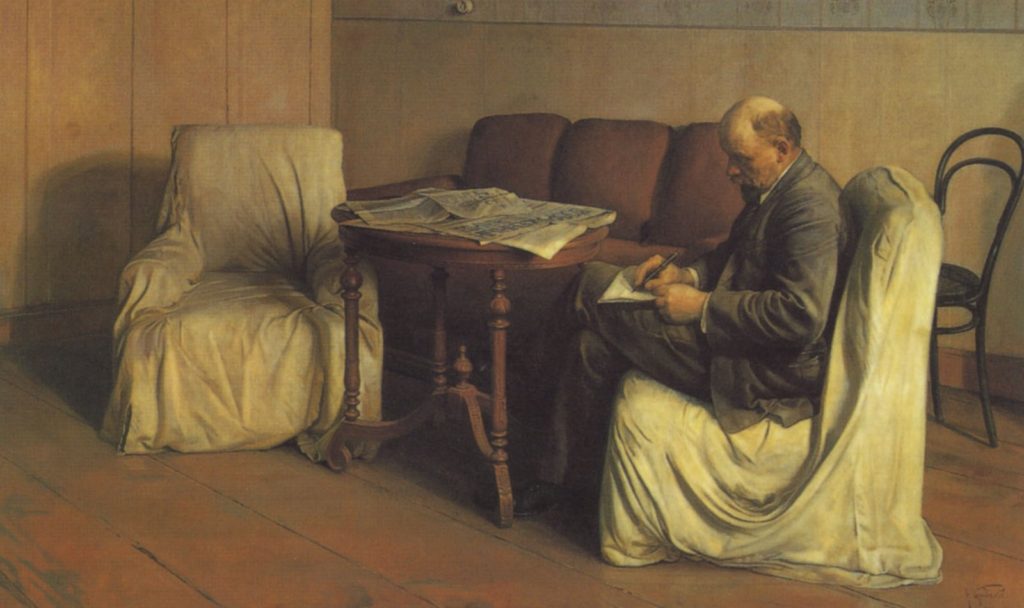
II. Introduction to revolutionary Marxism
Knoxville: Thursdays 6:30–9PM EST
University of Tennessee
Humanities and Social Sciences Building
1115 Volunteer Blvd. room 103A
Campus parking free after 6 PM
Suggested parking by Hodges Library or Haslam Music Center
• required / + recommended reading
Marx and Engels readings pp. from Robert C. Tucker, ed., Marx-Engels Reader (Norton 2nd ed., 1978)
Searchable PDF e-Book of all readings can be downloaded here
Recommended winter break preliminary readings:
+ Leszek Kolakowski, “The concept of the Left” (1968)
+ Richard Appignanesi and Oscar Zarate / A&Z, Introducing Lenin and the Russian Revolution / Lenin for Beginners (1977)
+ Sebastian Haffner, Failure of a Revolution: Germany 1918–19 (1968)
+ Tariq Ali and Phil Evans, Introducing Trotsky and Marxism / Trotsky for Beginners (1980)
+ James Joll, The Second International 1889–1914 (1966)
+ Edmund Wilson, To the Finland Station: A Study in the Writing and Acting of History (1940), Part II. Ch. (1–4,) 5–10, 12–16; Part III. Ch. 1–6
Film screenings
Sunday, January 21 (8:00 PM)
• Rosa Luxemburg (1986)
Meet in the Lindsay Young Auditorium on the 1st floor of Hodges Library.
Sunday, January 29 (8:00 PM)
• The Young Karl Marx (2017)
Meet in the Commons Practice Presentation Room 220-E on the 2nd floor of Hodges Library.
Suggested home viewing (click for stream/download)
• 37 Days (2014) [Episode 1] [Episode 2] [Episode 3]
• Fall of Eagles (1974) episodes: "Absolute Beginners", "The Secret War", and "End Game"
• Oliver Stone's Untold History of the United States (2012) Episodes A (1900-20) and B (1920-40)
• Reds (1981) [download currently unavailable]
February
Winter 2018
I. What is the "Left?" -- What is "Marxism?"
Week 11. What is Marxism? VI. Class consciousness | Jan. 18, 2018
• Lukács, Original Preface (1922), “What is Orthodox Marxism?” (1919), “Class Consciousness” (1920), History and Class Consciousness (1923)
+ Marx, Preface to the First German Edition and Afterword to the Second German Edition (1873) of Capital (1867), pp. 294–298, 299–302
Week 12. What is Marxism? VII. Ends of philosophy | Jan. 25, 2018
• Korsch, “Marxism and philosophy” (1923)
+ Being and becoming (freedom in transformation) / immanent dialectical critique chart of terms
+ Marx, To make the world philosophical (from Marx's dissertation, 1839–41), pp. 9–11
+ Marx, For the ruthless criticism of everything existing (letter to Arnold Ruge, September 1843), pp. 12–15
+ Marx, "Theses on Feuerbach" (1845), pp. 143–145
Winter–Spring 2018
II. Introduction to revolutionary Marxism
Week 13. Revolutionary leadership | Feb. 1, 2018
• Rosa Luxemburg, “The Crisis of German Social Democracy” Part 1 (1915)
• J. P. Nettl, “The German Social Democratic Party 1890–1914 as a Political Model” (1965)
• Cliff Slaughter, “What is Revolutionary Leadership?” (1960)
Week 14. Reform or revolution? | Feb. 8, 2018
• Luxemburg, Reform or Revolution? (1900/08)
+ Eugene Debs, "Competition versus Cooperation" (1900)
Week 15. Lenin and the vanguard party | Feb. 15, 2018
• Spartacist League, Lenin and the Vanguard Party (1978)
Week 16. What is to be done? | Feb. 22, 2018
• V. I. Lenin, What is to be Done? (1902)
+ Richard Appignanesi and Oscar Zarate / A&Z, Introducing Lenin and the Russian Revolution / Lenin for Beginners (1977)
Week 17. Mass strike and social democracy | Mar. 1, 2018
• Luxemburg, The Mass Strike, the Political Party and the Trade Unions (1906)
+ Luxemburg, "Blanquism and Social Democracy" (1906)
Week 18. Permanent revolution | Mar. 8, 2018
• Leon Trotsky, Results and Prospects (1906)
+ Tariq Ali and Phil Evans, Introducing Trotsky and Marxism / Trotsky for Beginners (1980)
Week 19. Mar. 15, 2018 (spring break)
Week 20. State and revolution | Mar. 22, 2018
• Lenin, The State and Revolution (1917)
Week 21. Imperialism | Mar. 29, 2018
• Lenin, Imperialism, the Highest Stage of Capitalism (1916)
+ Lenin, Socialism and War Ch. 1 The principles of socialism and the War of 1914–15 (1915)
Week 22. Failure of the revolution | Apr, 2018
• Luxemburg, “What does the Spartacus League Want?” (1918)
• Luxemburg, “On the Spartacus Programme” (1918)
+ Luxemburg, "German Bolshevism" (AKA "The Socialisation of Society") (1918)
+ Luxemburg, “The Russian Tragedy” (1918)
+ Luxemburg, “Order Reigns in Berlin” (1919)
+ Eugene Debs, “The Day of the People” (1919)
+ Sebastian Haffner, Failure of a Revolution: Germany 1918–19 (1968)
Week 23. Apr. 12, 2018 [Platypus international convention]
Week 24. Retreat after revolution | Apr. 19, 2018
• Lenin, “Left-Wing” Communism: An Infantile Disorder (1920)
+ Lenin, "Notes of a Publicist" (1922)
Week 25. Dialectic of reification | Apr. 26, 2018
• Lukács, “The Standpoint of the Proletariat” (Part III of “Reification and the Consciousness of the Proletariat,” 1923). Available in three sections from marxists.org: section 1 section 2 section 3
+ Being and becoming (freedom in transformation) / immanent dialectical critique chart of terms
Week 26. Lessons of October | May 3, 2018
• Trotsky, The Lessons of October (1924) [PDF]
+ Trotsky, "Stalinism and Bolshevism" (1937)
Week 27. Trotskyism | May 10, 2018
+ Trotsky, "To build communist parties and an international anew" (1933)
• Trotsky, The Death Agony of Capitalism and the Tasks of the Fourth International (1938)
+ Trotsky, "Trade unions in the epoch of imperialist decay" (1940)
+ Trotsky, Letter to James Cannon (September 12, 1939)
Week 28. The authoritarian state | May 17, 2018
• Friedrich Pollock, "State Capitalism: Its Possibilities and Limitations" (1941) (note 32 on USSR)
• Max Horkheimer, "The Authoritarian State" (1942)
Week 29. On the concept of history | May 24, 2018
• epigraphs by Louis Menand (on Edmund Wilson) and Peter Preuss (on Nietzsche) on the modern concept of history
+ Charles Baudelaire, from Fusées [Rockets] (1867)
+ Bertolt Brecht, "To posterity" (1939)
+ Walter Benjamin, "To the planetarium" (from One-Way Street, 1928)
+ Benjamin, "Experience and poverty" (1933)
+ Benjamin, Theologico-political fragment (1921/39?)
• Benjamin, "On the Concept of History" (AKA "Theses on the Philosophy of History") (1940) [PDF]
• Benjamin, Paralipomena to "On the Concept of History" (1940)
+ Being and becoming (freedom in transformation) / immanent dialectical critique chart of terms
Week 30. Reflections on Marxism | May 31, 2018
• Theodor Adorno, “Reflections on Class Theory” (1942)
• Adorno, “Imaginative Excesses” (1944–47)
+ Being and becoming (freedom in transformation) / immanent dialectical critique chart of terms
+ Adorno, Dedication, "Bequest", "Warning: Not to be Misused" and "Finale", Minima Moralia (1944–47)
+ Horkheimer and Adorno, "Discussion about Theory and Praxis" (AKA "Towards a New Manifesto?") [Deutsch] (1956)
Week 31. Theory and practice | Jun. 7, 2018
+ Adorno, “On Subject and Object” (1969)
• Adorno, “Marginalia to Theory and Praxis” (1969)
• Adorno, “Resignation” (1969)
+ Being and becoming (freedom in transformation) / immanent dialectical critique chart of terms
+ Adorno, “Late Capitalism or Industrial Society?” (AKA “Is Marx Obsolete?”) (1968)
+ Esther Leslie, Introduction to the 1969 Adorno-Marcuse correspondence (1999)
+ Adorno and Herbert Marcuse, correspondence on the German New Left (1969)
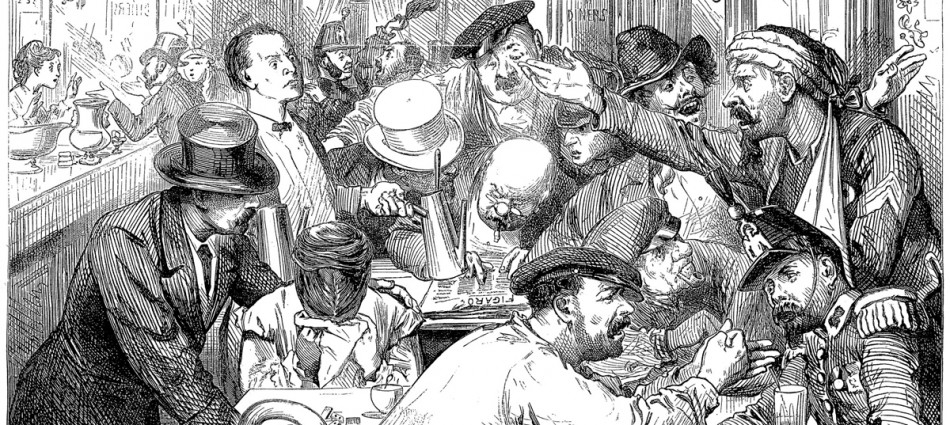
Join us for informal discussions on politics, current events, and the latest issue of the Platypus Review! Open to the public, new attendants encouraged. This is a strictly social event to balance out our reading group on the history of the Left (more info here).
Sundays 4-6 PM
The Golden Roast
825 Melrose Place
Knoxville, TN 37916
Look for a stack of Platypus Reviews on the table to identify us!