


A series of 10 sessions introducing Platypus’s approach to the history of Marxism.
• required / + recommended [ / ++ supplemental ] readings
Essential background reading:
• Leszek Kolakowski, “The Concept of the Left”
Recommended preliminary/background readings:
+ Edmund Wilson, To the Finland Station: A Study in the Writing and Acting of History (1940), Part II. Ch. (1–4,) 5–10, 12–16; Part III. Ch. 1–6
+ James Joll, The Second International 1889-1914 (1966)
+ Sebastian Haffner, Failure of a Revolution: Germany 1918-19 (1968)
Week 1
• Chris Cutrone, “The Marxist hypothesis: a response to Alain Badiou’s ‘communist hypothesis’”
• Cutrone, “Capital in history: The need for a Marxian philosophy of history of the Left”
+ Cutrone, “The Left is dead! — Long live the Left!” Vicissitudes of historical consciousness and the possibilities for emancipatory social politics today
+ Kant, “Idea for a Universal History from a Cosmopolitan Point of View” (1784)
+ Benjamin Constant, “The Liberty of the Ancients Compared with that of the Moderns” (1819)
[ ++ Rousseau, Discourse on the Origin of Inequality (1754) ]
[ ++ Rousseau, selection from The Social Contract (1762) ]
Week 2
• Marx and Friedrich Engels, selections from the Manifesto of the Communist Party (1848), pp. 469-500
• Marx, To make the world philosophical (from Marx’s dissertation, 1839–41), pp. 9–11
• Marx, For the ruthless criticism of everything existing (letter to Arnold Ruge, September 1843), pp. 12–15
Week 3
• Screening: Margarethe von Trotta, dir., Rosa Luxemburg (1986 film)
• Rosa Luxemburg, “The Crisis of German Social Democracy” Part 1 (1915), and “Order Reigns in Berlin” (1919)
• J. P. Nettl, “The German Social Democratic Party 1890-1914 as a Political Model” (1965)
[ ++ James Joll, The Second International 1889-1914 (1966) ]
Week 4
• Cliff Slaughter, “What is Revolutionary Leadership?” (1960)
Week 5
• Richard Appignanesi and Oscar Zarate / A&Z, Introducing Lenin and the Russian Revolution / Lenin for Beginners (1977)
Week 6
• Spartacist League, Lenin and the Vanguard Party (1978)
Week 7
• Luxemburg, “The Russian Tragedy” (1918), “Order Reigns in Berlin” (1919)
[ ++ Sebastian Haffner, Failure of a Revolution: Germany 1918-19 (1968) ]
Week 8
• Tariq Ali and Phil Evans, Introducing Trotsky and Marxism / Trotsky for Beginners (1980)
Week 9
• Max Horkheimer, selections from Dämmerung
+ Theodor W. Adorno, “Imaginative Excesses” (1944–47)
Week 10
• Theodor W. Adorno, “Reflections on Class Theory” (1942)
+ Adorno and Horkheimer, “Towards a New Manifesto?” (1956)
• Adorno, “Resignation” (1969)
I. What is the “Left?” — What is “Marxism?”
Saturdays 1–4PM
School of the Art Institute of Chicago (SAIC)
112 S. Michigan Ave. room 920
University of Chicago (UChicago)
The Reynolds Club 2nd floor South Lounge
5706 S. University Ave.
• required / + recommended reading
A. Sept. 11, 2010 (SAIC only)
• Moishe Postone, “History and Helplessness: Mass Mobilization and Contemporary Forms of Anticapitalism”(2006)
+ Iraqi Communist Party, Letter about the Situation in Iraq (2006)
• Spartacist League, “The Senile Dementia of Post-Marxism” (2006)
+ Liza Featherstone, Doug Henwood, and Christian Parenti, “ ‘Action Will Be Taken’: Left Anti-Intellectualism and its Discontents” (2002)
B. Sept. 18, 2010 (SAIC only)
• Karl Marx, To make the world philosophical (from Marx’s dissertation, 1839–41), For the ruthless criticism of everything existing (1843), Theses on Feuerbach (1845)
C. Sept. 25, 2010 (SAIC only)
• epigraphs by James Miller (on Rousseau), Peter Preuss (on Nietzsche) and Louis Menand (on Edmund Wilson) on modern history and freedom
• Robert Pippin, “On Critical Theory” (2003)
• Chris Cutrone, “Capital in History” (2008)
Week 1. Oct. 2, 2010
• Kant, “Idea for a Universal History from a Cosmopolitan Point of View” (1784)
+ Rousseau, Discourse on the Origin of Inequality (1754)
• Benjamin Constant, “The Liberty of the Ancients Compared with that of the Moderns” (1819)
+ Rousseau, selection from The Social Contract (1762)
Week 2. Oct. 9, 2010
• Leszek Kolakowski, “The Concept of the Left” (1968)
Week 3. Oct. 16, 2010
• Max Horkheimer, selections from Dämmerung (1926–31)
• Theodor W. Adorno, “Imaginative Excesses” (1944–47)
Week 4. Oct. 23, 2010
• Siegfried Kracauer, “The Mass Ornament” (1927)
• Wilhelm Reich, “Ideology as Material Power” (1933/46)
Week 5. Oct. 30, 2010
• Marx, selections from Economic and Philosophic Manuscripts (1844)
• Marx and Engels, Manifesto of the Communist Party (1848)
Week 6. Nov. 6, 2010
• Georg Lukács, “The Phenomenon of Reification” (Part I of “Reification and the Consciousness of the Proletariat,” History and Class Consciousness, 1923)
Week 7. Nov. 13, 2010
• Lukács, “Preface” (1922) , “What is Orthodox Marxism?” (1919) , “Class Consciousness” (1920), History and Class Consciousness (1923)
Week 8. Nov. 20, 2010
• Karl Korsch, “Marxism and Philosophy” (1923)
+ Marx, To make the world philosophical (from Marx’s dissertation, 1839–41), For the ruthless criticism of everything existing (1843)
+ Korsch, “The Marxism of the First International” (1924)
Week 9. Dec. 4, 2010 (SAIC) / Jan. 15, 2011 (UChicago)
• Juliet Mitchell, “Women: the Longest Revolution” (1966)
• Clara Zetkin and Vladimir Lenin, “An interview on the woman question” (1920)
• Adorno, “Sexual Taboos and the Law Today” (1963)
• John D’Emilio, “Capitalism and Gay Identity” (1983)
Week 10. Dec. 11, 2010 (SAIC) / Jan. 22, 2011 (UChicago)
• Richard Fraser, “Two Lectures on the Black Question in America and Revolutionary
Integrationism” (1953)
• James Robertson and Shirley Stoute, “For Black Trotskyism” (1963)
+ Spartacist League, “Black and Red: Class Struggle Road to Negro Freedom” (1966)
+ Bayard Rustin, “The Failure of Black Separatism” (1970)
• Adolph Reed, “Black Particularity Reconsidered” (1979)
+ Reed, “Paths to Critical Theory” (1984)
Week 11. Dec. 18, 2010 (SAIC) / Jan. 8, 2011 (UChicago)
+ Marx, selections from the Grundrisse (1857–61)
• Martin Nicolaus, “The Unknown Marx” (1968)
• Postone, “Necessity, Labor, and Time” (1978)
+ André Gorz, from Strategy for Labor (1964)
+ Murray Bookchin, Listen, Marxist! (1969)
Platypus Marxist reading group
June 5 – August 14, 2010
Saturdays 1–4PM at:
School of the Art Institute of Chicago
112 S. Michigan Ave. room 707
Marx and Marxism
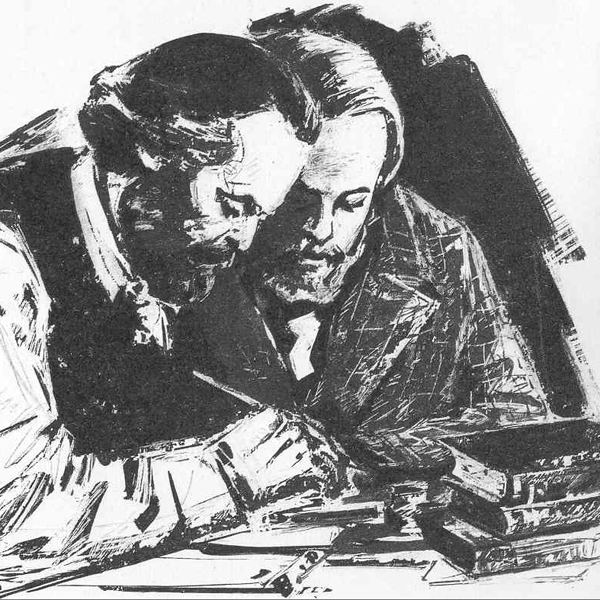
- Marx and Engels at work together
Readings pp. from Robert C. Tucker, ed., Marx-Engels Reader (Norton 2nd ed., 1978) (* at marxists.org)
June 5
Karl Marx on the history of his opinions (from Preface to A Contribution to the Critique of Political Economy), pp. 3–6
Marx, To make the world philosophical, pp. 9–11
Marx, For the ruthless criticism of everything existing, pp. 12–15
Marx, Theses on Feuerbach, pp. 143–145
June 12
Marx, On The Jewish Question, pp. 26–52
June 19
Marx, The coming upheaval [see bottom of section, beginning with "Economic conditions had first transformed the mass"] (from The Poverty of Philosophy, 1847), pp. 218–219
Marx and Engels, Communist Manifesto, pp. 469–500
Marx, Address to the Central Committee of the Communist League, pp. 501–511
June 26
The tactics of social democracy (Engels's introduction to Marx, The Class Struggles in France), pp. 556–573
Marx, from The Class Struggles in France 1848–50, pp. 586–593
July 3
[break for Independence Day weekend]July 10
Marx, The 18th Brumaire of Louis Bonaparte, pp. 594–617
July 17
Marx, On imperialism in India, 653–664 (available online as The British Rule in India and The Future Results of British Rule in India)
Marx and Engels, Europocentric world revolution, pp. 676–677 (available online as Marx to Engels October 8, 1858 and Engels to Kautsky September 12, 1882)
July 24
Marx, The Civil War in France, pp. 618–652
July 31
Marx, Inaugural address to the First International, pp. 512–519
Karl Korsch, The Marxism of the First International *
August 7
Korsch, Introduction to Marx, Critique of the Gotha Programme *
Marx, Critique of the Gotha Programme, pp. 525–541
August 14
Max Horkheimer, "The Authoritarian State" (1940) (in The Essential Frankfurt School Reader, eds. Andrew Arato and Eike Gebhardt, pp. 95–117)
* * *
August 28
Vladimir Lenin, "Karl Marx" (1914)
I am writing with some very brief notes on the first week of readings from Kant, his essays on "What is Enlightenment?" and "The Idea for a Universal History from a Cosmopolitan Point of View," and Benjamin Constant's essay on "The Liberty of the Ancients Compared with that of the Moderns."
I'd like to write some notes to you now about beginning this reading group mini-course with Rousseau.